Global Luxury Brand Analysis H1 2026 Report
Discover how luxury brands are recalibrating in H1 2026 through pricing restraint, hard-luxury growth, immersive activations, sport and cultural relevance.
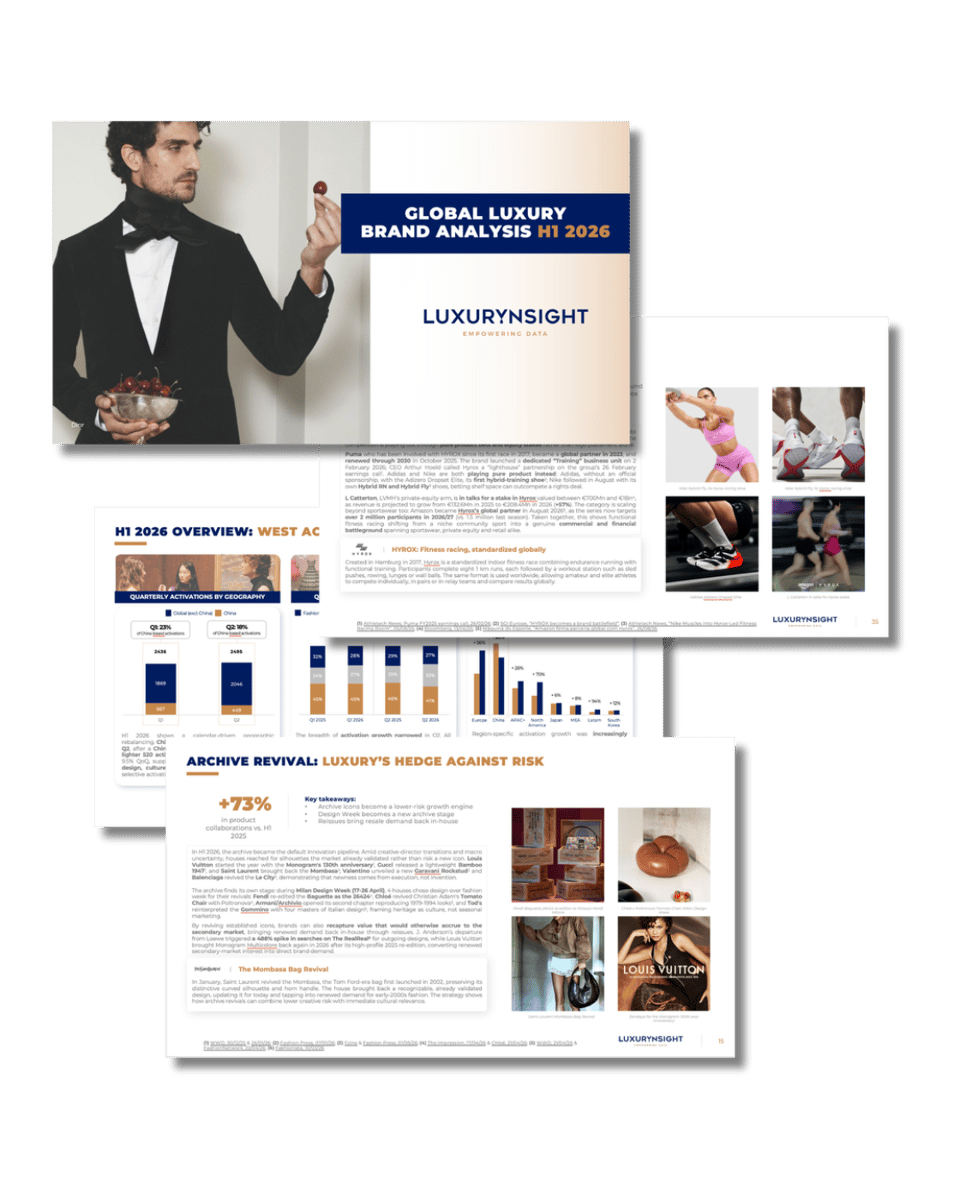
In this Luxurynsight Global Luxury Brand Analysis H1 2026, gain critical intelligence on how leading luxury brands are navigating a gradual and uneven recovery through pricing restraint, hard-luxury momentum, selective market investment, and deeper cultural engagement. Powered by LY Watch, LY Price and LY Trends, the report analyzes 4,900+ brand activations across Fashion & Leather Goods, Perfume & Cosmetics, Watches & Jewelry, and Sports & Lifestyle to uncover the strategies shaping luxury in the first half of 2026.
H1 2026 Luxury Activations Overview
Luxury entered H1 2026 in a gradual recovery, with total monitored brand activations increasing +14% year-over-year. Growth was concentrated in Watches & Jewelry, which surged +39%, while Beauty grew +7% and Fashion & Leather Goods +4%. Communication gained importance across categories as brands increasingly prioritized visibility, desirability and experiential engagement.
Geographically, the market is also recalibrating. Europe (+56%) and North America (+70%) accelerated, while China-based activations declined -20%, signaling a move toward more selective and immersive engagement rather than a retreat from the market.
KEY TAKEAWAYS
- Luxury Enters a More Selective Recovery: Total monitored activations rose +14% YoY to 4,931, but growth increasingly concentrated in Watches & Jewelry, with the broader luxury market recovering gradually. W&J activations increased +39%, ahead of Beauty (+7%) and Fashion & Leather Goods (+4%).
- Pricing Restraint Meets Proven Icons: Average tracked luxury bag prices increased just +2.1%, the softest pace in five years. At the same time, brands turned back to proven products and archive icons, reviving designs such as Louis Vuitton’s Monogram, Saint Laurent’s Mombasa and Omega’s Seamaster to drive demand with lower creative risk.
- China Recalibrates, Rather Than Retreats: China remained strategically significant, representing approximately one-fifth of tracked luxury activity despite a -20% decline in activations. Brands increasingly favored fewer, more immersive experiences, from heritage-site takeovers for Chinese New Year to locally rooted cultural activations.
- Experiences Become a Core Growth Lever: Communication gained weight, particularly in Beauty and Watches & Jewelry, as brands moved beyond traditional retail into hospitality, wellness, sport and cultural experiences. Beauty event activations grew +62%, with repeatable concepts such as Lancôme’s Skin Science Club demonstrating a shift from one-off campaigns toward scalable experiential platforms.
- Sport Evolves from Sponsorship to Brand Territory: In H1 2026, luxury brands increasingly moved from simply sponsoring sporting events to building long-term positions within sporting culture. Partnerships, retail investments and player or federation relationships helped brands turn major sporting moments into sustained platforms for visibility, lifestyle relevance and customer engagement.
- New Challengers Reshape the Competitive Landscape: Korean beauty and Gulf fragrance houses are expanding rapidly into Western markets, while brands such as Alo Yoga are moving beyond their original categories into wellness, accessories and lifestyle. K-beauty exports to Europe reached $1.6B in H1 2026, while Amouage recorded +74% retail sales growth, highlighting the growing pressure from new geographic and category challengers.