Global Luxury Brand Analysis H1 2025 Report
Pricing, Activations & Market Trends
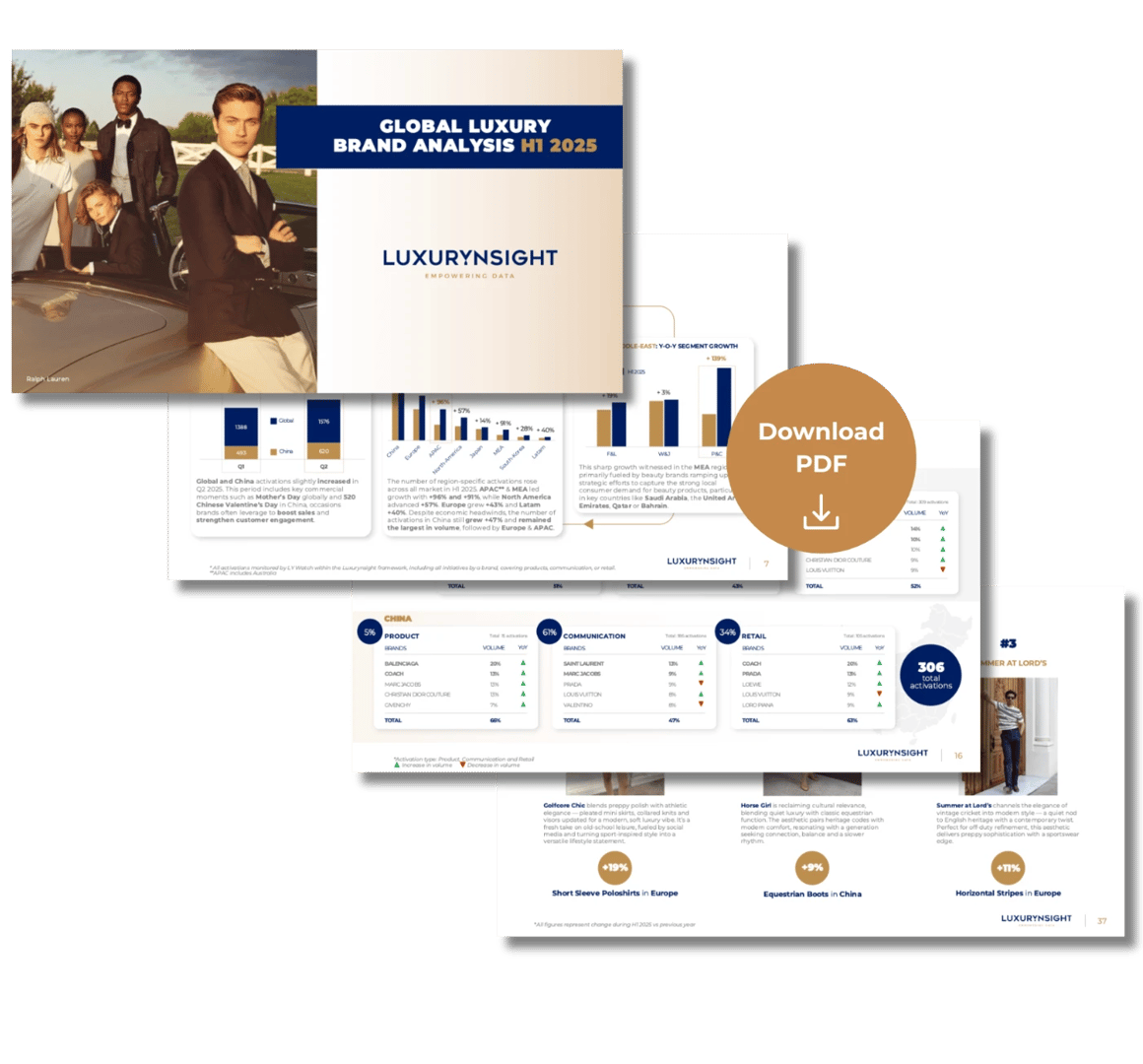
Dive into Luxurynsight’s Global Luxury Brand Analysis H1 2025: discover pricing shifts, cultural activations, and trend insights shaping the future of fashion, beauty, jewelry, and sports worldwide.
SUMMARY
The luxury industry entered 2025 amidst its first global slowdown in years, following a 1% contraction of the personal luxury goods market in 2024 to €364 billion. This contraction was primarily driven by a softer macroeconomic backdrop, weaker consumer spending, and the pressure of new U.S. tariff policy. Total brand activations declined by 2% year-over-year (Y-o-Y) in volume during the first half (January to June). This decrease reflects a wider strategic shift for brands, which are increasingly betting on localized initiatives over global activations.
KEY TAKEAWAYS
- Sector Mix Realignment: The Perfume & Cosmetics (P&C) sector witnessed growth, rising to 44% of all brand activity and becoming the top sector by volume. P&C was the sole segment to expand over H1. Conversely, Fashion & Leather Goods (F&LG) and Watches & Jewelry (W&J) contracted, holding 32% and 24% of the sector mix, respectively.
- Retail Momentum: Retail activations surged significantly, increasing by +48% Y-o-Y. This reaffirms the critical role of physical touchpoints in brand strategies. Pop-ups accounted for nearly half of retail activations, while brands utilized mobile concepts (e.g., carts, traveling units) for low-capital, extended reach. Experiential flagships, exemplified by LVMH's "The Louis" in Shanghai, are setting new benchmarks for building loyalty and "heat".
- Regional Growth: Region-specific activations saw growth across all markets. The APAC region recorded the strongest expansion (+96%), closely followed by MEA (+91%), fueled by booming luxury markets in countries like Saudi Arabia and the United Arab Emirates. North America also saw solid gains (+57%). China remained the largest market by volume, with activations climbing +47%.
- Cultural Strategy: Luxury brands expanded their role as cultural producers. In China, exhibitions rose +59%, reframing consumer engagement by offering accessibility through heritage storytelling. Brands are also diversifying into lifestyle territories, blurring lines between categories (e.g., homeware, wellness), as seen during Milan Design Week 2025.
- Pricing and Relevance: The softer macroeconomic environment pushed brands to recalibrate strategies. Average luxury prices rose about +3% globally in H1 2025. Pricing dynamics varied by region and category, with tariffs weighing on F&LG and a strong Swiss franc pressuring W&J. P&C addressed softer consumption by investing more heavily in innovation and personalization.